
Everest Base Camp + Island Peak
Everest Base Camp and Island Peak
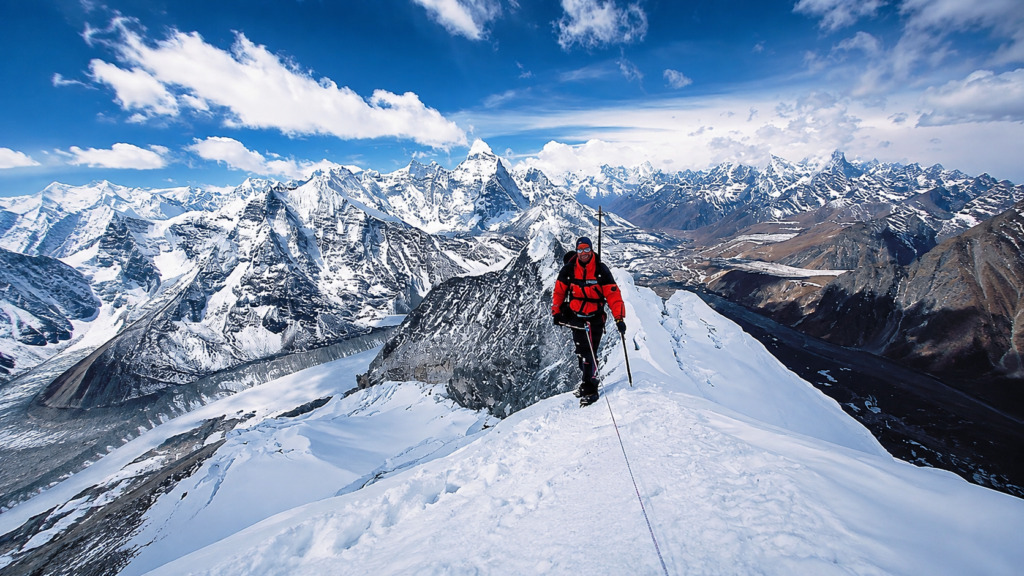
The Everest Base Camp and Island Peak trek combines the classic journey through the Khumbu with the ascent of Island Peak, a Himalayan summit rising above 6,000 meters. The route includes Everest Base Camp, Kala Patthar, the Imja Valley and a genuine mountaineering objective, making it one of the most adventurous trekking itineraries in the Everest region.
The Route
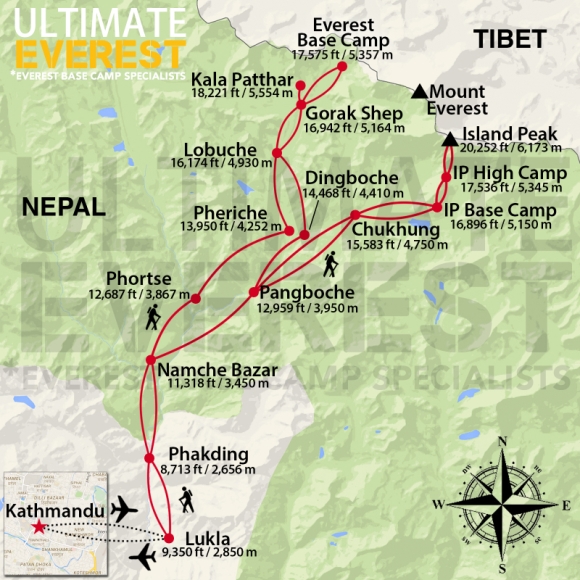
The journey follows the classic Everest trail from Lukla through Phakding and Namche Bazaar before continuing deeper into the Khumbu toward Pheriche, Lobuche and Everest Base Camp.
After reaching Everest Base Camp and climbing Kala Patthar, the route turns east into the Imja Valley. The trail passes through Dingboche and Chukhung before reaching Island Peak Base Camp and High Camp.
The Island Peak ascent introduces genuine mountaineering terrain, including glacier travel, crampon use, fixed ropes and a steep snow slope leading toward the summit ridge.
After the summit attempt, the route descends through Pangboche and Namche Bazaar before returning to Lukla for the flight back to Kathmandu.
What Makes This Trek Special
Everest Base Camp
Follow the classic Khumbu route to Everest Base Camp beside the Khumbu Glacier and beneath the dramatic Everest massif.
Kala Patthar
Climb one of the Everest region’s best-known viewpoints for sweeping views of Everest, Nuptse and the upper Khumbu.
Island Peak Summit
Add a true Himalayan climbing objective involving glacier travel, crampons, ropes and a high summit above 6,000 meters.
Day-to-Day Itinerary
Day 1: Arrival in Kathmandu
Arrive in Kathmandu and settle into your accommodation. The remainder of the day can be used to prepare equipment and get ready for the journey into the Everest region.
Day 2: Flight to Lukla – Trek to Phakding (8,713 ft / 2,656 m)
The journey begins with the flight to Lukla. After landing, the trail descends gradually through the Dudh Koshi Valley toward Phakding.
Day 3: Trek to Namche Bazaar (11,318 ft / 3,450 m)
The route enters Sagarmatha National Park near Monjo and crosses the Dudh Koshi several times on suspension bridges before climbing steeply toward Namche Bazaar.
Day 4: Namche Bazaar – Acclimatization Day (11,318 ft / 3,450 m)
A full day is spent around Namche Bazaar to allow additional time for acclimatization before continuing higher into the Khumbu.
Day 5: Trek to Phortse (12,687 ft / 3,867 m)
The trail follows the side of the valley and climbs through rhododendron forest and seasonal yak grazing settlements before reaching Phortse.
Day 6: Trek to Pheriche (13,950 ft / 4,252 m)
The route descends through forest, crosses the Imja Khola and climbs steadily toward the higher valleys. Ama Dablam dominates the landscape as the trail approaches Pheriche.
Day 7: Pheriche – Acclimatization Day (13,950 ft / 4,252 m)
A second acclimatization day provides additional time for the body to adapt. Short hikes can be made up the Imja Khola Valley or onto the ridges above Pheriche, providing useful altitude exposure and views across the surrounding peaks.
Day 8: Trek to Lobuche (16,174 ft / 4,930 m)
The trail climbs toward the Khumbu Glacier and crosses the terminal moraine, passing memorials dedicated to climbers and Sherpas before reaching Lobuche.
Day 9: Trek to Gorak Shep – Everest Base Camp (17,575 ft / 5,357 m)
The trail follows the broad upper valley alongside the Khumbu Glacier toward Gorak Shep before continuing over glacial terrain to Everest Base Camp. After visiting Base Camp, return to Gorak Shep for the night.
Day 10: Kala Patthar (18,221 ft / 5,554 m) – Trek to Dingboche (14,468 ft / 4,410 m)
An early ascent of Kala Patthar provides outstanding views toward Everest and the Khumbu Glacier before the route descends toward Dingboche.
Day 11: Trek to Chukhung (15,583 ft / 4,750 m)
The trail climbs gradually through the Imja Valley toward Chukhung. Island Peak becomes increasingly prominent as the route approaches the climbing portion of the expedition.
Day 12: Trek to Island Peak Base Camp (16,896 ft / 5,150 m)
Continue deeper into the Imja Valley toward Island Peak Base Camp. The shorter trekking day provides time to rest and prepare for the climb ahead.
Day 13: Trek to High Camp (17,536 ft / 5,345 m)
The route climbs approximately 200 meters higher to High Camp. The remainder of the day is used for rest, equipment preparation and final organization before the summit attempt.
Day 14: Ascent of Island Peak (20,210 ft / 6,160 m)
The summit day begins very early. The route involves glacier travel, crampons, ropes and a steep snow slope leading toward the summit ridge. From the summit area, expansive views include Lhotse’s south face and the surrounding Everest-region peaks. Descend by the same route after the climb.
Day 15: Contingency Day
A spare day is built into the itinerary for weather, climbing conditions or schedule adjustments.
Day 16: Trek to Pangboche (12,959 ft / 3,950 m)
Descend through Chukhung and Dingboche before rejoining the main Everest trail and continuing toward Pangboche.
Day 17: Trek to Namche Bazaar (11,318 ft / 3,450 m)
Continue down the Khumbu Valley through the Tengboche area before returning to Namche Bazaar.
Day 18: Trek to Lukla (9,186 ft / 2,800 m)
The final trekking day follows the Dudh Koshi Valley from Namche Bazaar back toward Lukla.
Day 19: Fly to Kathmandu
Weather permitting, fly back to Kathmandu and spend the remainder of the day in the city.
Day 20: Depart Kathmandu
Depart Kathmandu or continue with additional travel in Nepal.
How Difficult Is This Trek?
Everest Base Camp and Island Peak is considerably more demanding than a standard trekking itinerary. In addition to long days and sustained high altitude, the Island Peak ascent introduces glacier travel and basic mountaineering techniques.
Trekkers should arrive in excellent physical condition and be prepared for cold temperatures, steep terrain, long climbing days and the use of technical equipment such as crampons, harnesses and ropes.
Altitude & Acclimatization
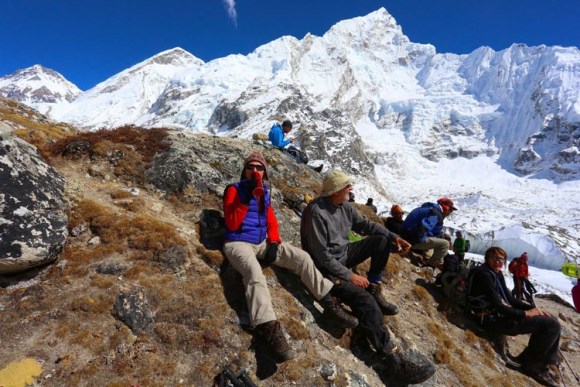
This itinerary reaches several locations above 5,000 m and culminates on Island Peak at approximately 20,210 ft / 6,160 m.
The acclimatization days at Namche Bazaar and Pheriche, along with the gradual progression through Chukhung, Base Camp and High Camp, are important parts of the itinerary. Even with a careful schedule, altitude illness remains a risk and symptoms should never be ignored.
Best Time to Trek
The main seasons for Everest Base Camp and Island Peak are generally March through May and September through November.
Because this itinerary includes a high-altitude summit attempt, snow, ice, wind and glacier conditions are especially important. Conditions on Island Peak can vary significantly even during the main trekking seasons.
Learn more about Nepal’s trekking seasons →
Related Treks
Everest Base Camp
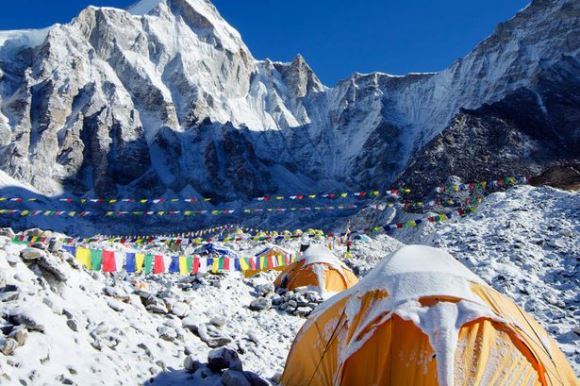
The classic Khumbu route to Everest Base Camp and Kala Patthar without the additional climbing objective.
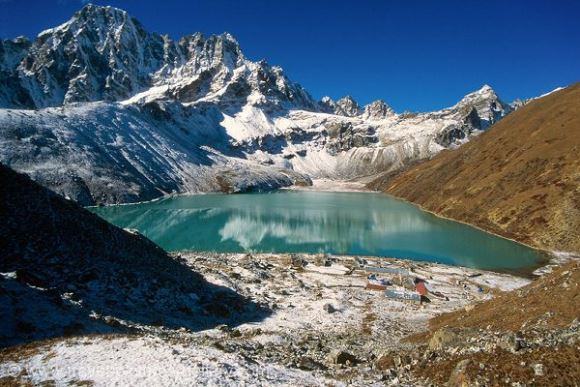
Everest Base Camp via Gokyo Lakes
A longer Everest route through Gokyo, Gokyo Ri and Cho La Pass before reaching Base Camp.

Compare All Treks
Explore Everest, Annapurna, Langtang and Manaslu trekking routes.